Tulsi Vivah 2026: date, story and simple puja vidhi
Tulsi Vivah 2026 is on Saturday, 21 November, the day after Dev Uthani Ekadashi. The tithi times, the story, and an easy way to do the puja at home.
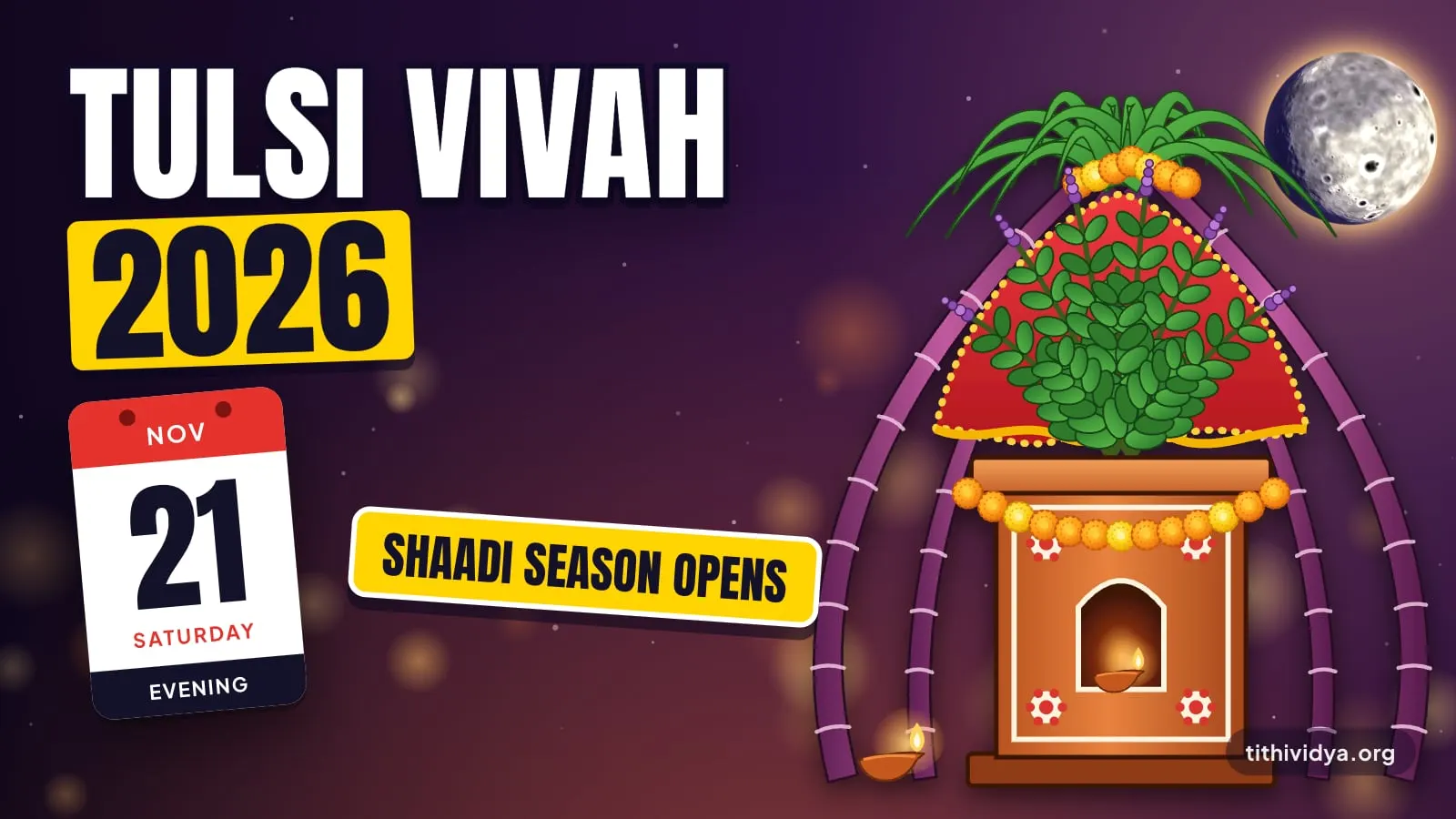
Tulsi Vivah 2026 is on Saturday, 21 November, the day after Dev Uthani Ekadashi. Its tithi, Dwadashi, runs from 6:32 am that morning to 4:57 am on Sunday. So the whole evening, when most families hold the wedding, falls inside it.
It's a wedding with a plant as the bride. Families marry the tulsi (holy basil) to Vishnu, and once it's done, the Hindu wedding season is open. Not every family picks the same day, though, so here's how to choose yours, the story behind it, and a simple way to do it at home.
Tulsi Vivah 2026 date and time
| Date and time (IST) | |
|---|---|
| Tulsi Vivah | Saturday, 21 November |
| Dwadashi begins | Saturday, 21 November, 6:32 am |
| Dwadashi ends | Sunday, 22 November, 4:57 am |
| Sunset in New Delhi | Saturday, 5:25 pm |
| Last day for Tulsi Vivah | Tuesday, 24 November (Kartik Purnima) |
These dates come from Tithi Vidya, which works out the sun and moon from NASA JPL's DE440 data (here's how). The tithi times are the same everywhere in India.
Which day does your family keep?
Tradition allows any day from Dev Uthani Ekadashi to Kartik Purnima, and families stick to their own custom:
- On the Ekadashi itself, Friday, 20 November. Some homes hold the wedding that evening, right after the Dev Uthani Ekadashi puja.
- On Dwadashi, Saturday, 21 November. This is the most common day. In Andhra Pradesh and Telangana, where it's the main day, it's called Ksheerabdi Dwadashi.
- Any evening up to Kartik Purnima, Tuesday, 24 November. Many families in Maharashtra pick a day in this window.
Not sure which is yours? Ask whoever runs the puja in your home. Every one of these days is correct within its tradition.
Read next: Chhath Puja 2026: dates, Kharna and arghya times, the other big Kartika festival, which starts on 13 November.
The story of Tulsi Vivah
The story most families tell begins with Vrinda, a woman devoted to Vishnu. She married Jalandhara, a powerful asura, and her devotion made him unbeatable in battle. To end his reign, Vishnu took Jalandhara's form and broke Vrinda's vow, and Shiva then defeated Jalandhara.
When Vrinda learned of the trick, she cursed Vishnu to become a stone, the shaligram, and she gave up her life. The tulsi plant grew where she had been. Moved by her devotion, Vishnu promised to marry her every year as the shaligram, and Tulsi Vivah is that wedding. Wikipedia's Tulsi Vivah page tells the story in more detail, with the regional versions.
Tulsi Vivah vidhi: a simple puja at home
Many families do a home Tulsi Vivah themselves, without a priest. Here's a simple version that follows the common steps:
- Clean the spot. Wash the tulsi pot or the tulsi platform, draw a rangoli in front, and light diyas around it.
- Build the mandap. Tie four sugarcane stalks together over the plant, like a small wedding canopy.
- Dress the bride. Drape the tulsi in a red chunari or sari, and add bangles, a bindi and flowers.
- Seat the groom. Place a shaligram, or a small idol or picture of Vishnu or Krishna, beside the tulsi.
- Tie the knot. Wind a cotton thread around the two. In Maharashtra, families hold a cloth between them and sing the mangalashtak, then remove it.
- Do the pheras. Carry the shaligram around the tulsi seven times, then do the aarti.
- Share the prasad. Sugarcane, fruit, sweets and peanuts are common.
Many people fast until the puja is over. If you're pregnant, diabetic or on medicine, talk to your doctor before a fast.
Did you know? In Maharashtra, a couple with no daughter often does the kanyadaan, giving the tulsi away as the bride's parents. It's seen as a blessing for them.
Why it opens the wedding season
For four months before Dev Uthani, many families don't hold weddings. Tradition says Vishnu sleeps through this time, called Chaturmas, and he wakes on Dev Uthani Ekadashi. Tulsi Vivah is the first wedding after he wakes, so once it's done, the shehnai comes back out and the wedding season begins.
Mithila has its own famous wedding day later in the season: Vivah Panchami on 14 December, when Ram and Sita's wedding is celebrated.
Common questions
Is Tulsi Vivah on Ekadashi or Dwadashi?
Both are followed. Most families hold it on Dwadashi, which in 2026 is Saturday, 21 November. Some hold it on the Ekadashi evening, Friday, 20 November.
What time should Tulsi Vivah be done?
In the evening, after sunset. In New Delhi the sun sets at 5:25 pm on 21 November, and Dwadashi lasts until 4:57 am, so the whole evening works. Tithi Vidya doesn't work out muhurats, so ask your family priest if you want an exact time.
When is Tulsi Vivah in 2027?
On Thursday, 11 November 2027, the day after Dev Uthani Ekadashi on 10 November.
Tip: Tulsi Vivah comes back on the same tithi every year, and so does your own birth tithi. Find my tithi shows yours, with your tithi birthday for the next 100 years.
Keep reading
- Dev Uthani Ekadashi 2026: 20 or 21 November?: the day before, with parana times for 12 cities.
- Vivah Panchami 2026: the wedding of Ram and Sita, and why some families avoid weddings that day.
- Chhath Puja 2026: four days of offerings to the setting and rising sun.
Share this article
When is your moon birthday?
Enter your birth date, time and place. Free, private and open source.
Find my moon birthday